











What Causes Dandruff?
Dandruff is usually down to one of a few things: an oily scalp where excess sebum builds up and flakes off, a dry and dehydrated scalp, sensitivity to certain hair products, or a naturally occurring yeast-like organism on the scalp multiplying more than usual. Knowing which one you're dealing with helps you pick the right active ingredient rather than guessing.
Why Salicylic Acid Works for Dandruff
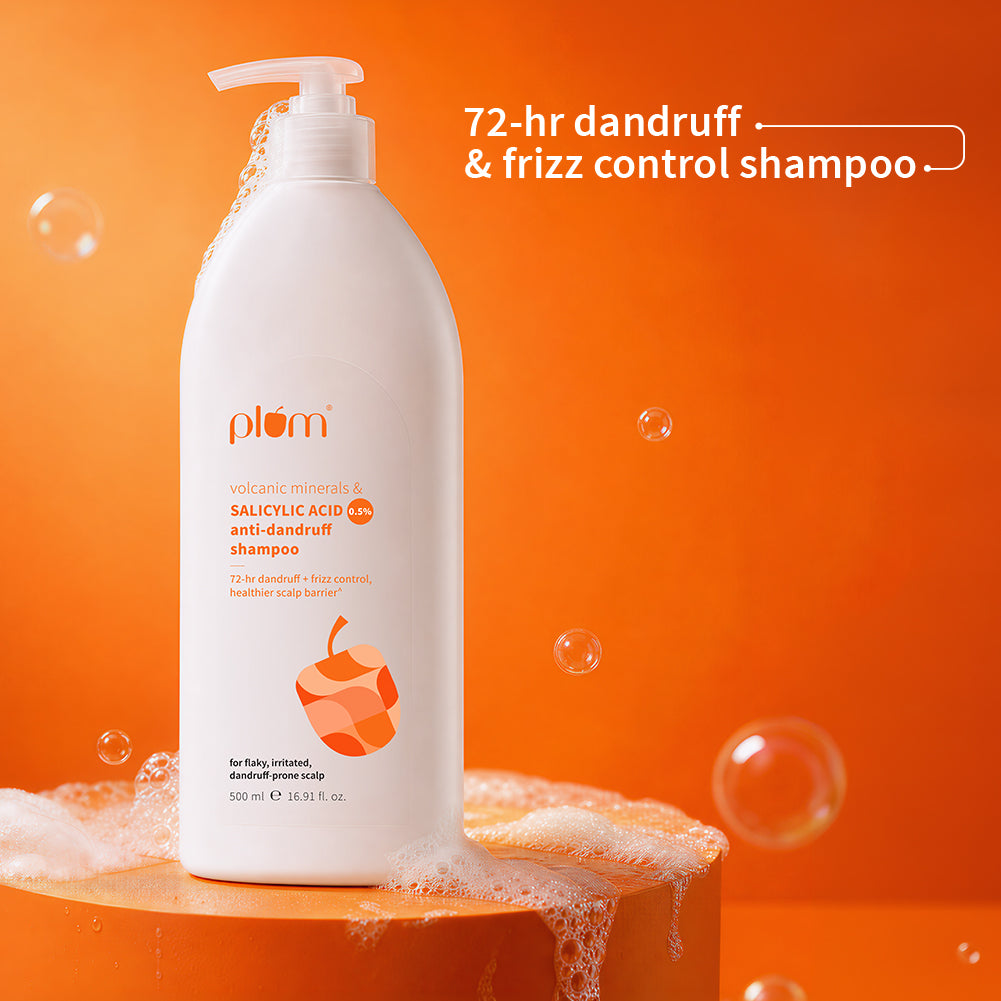
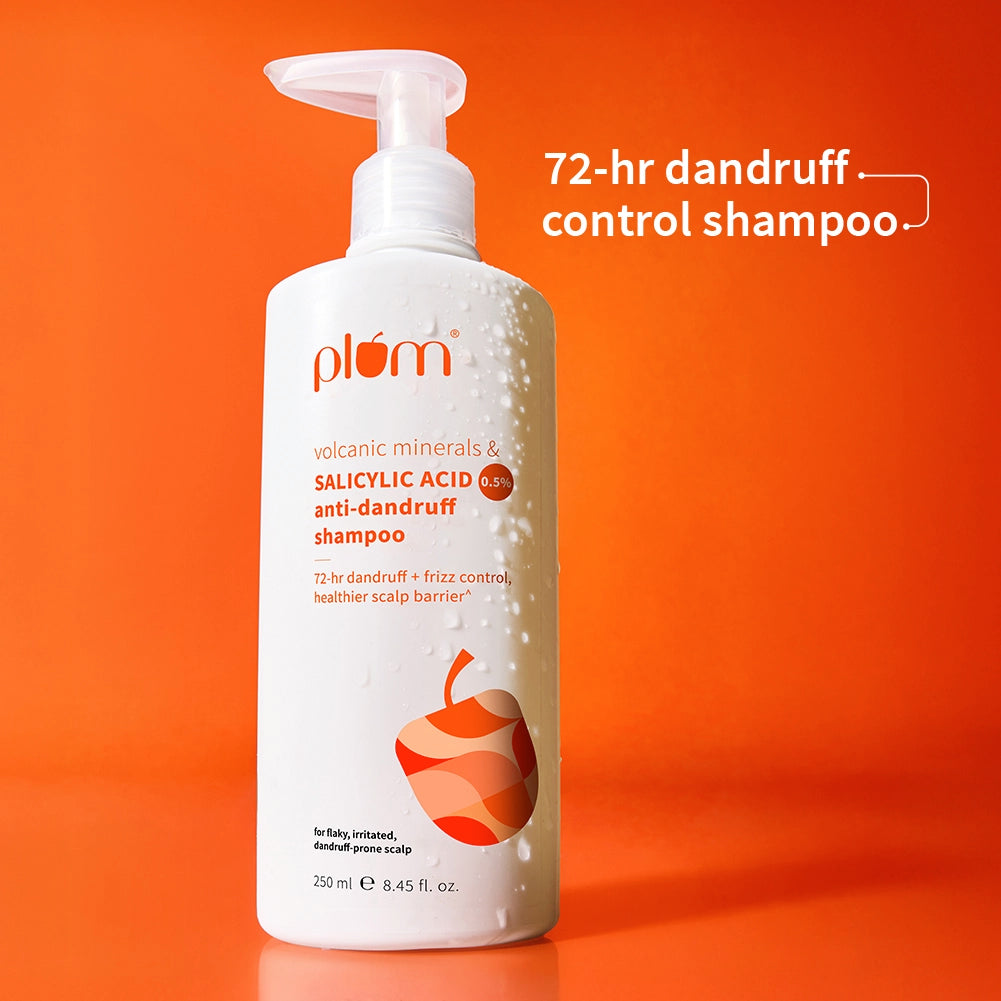
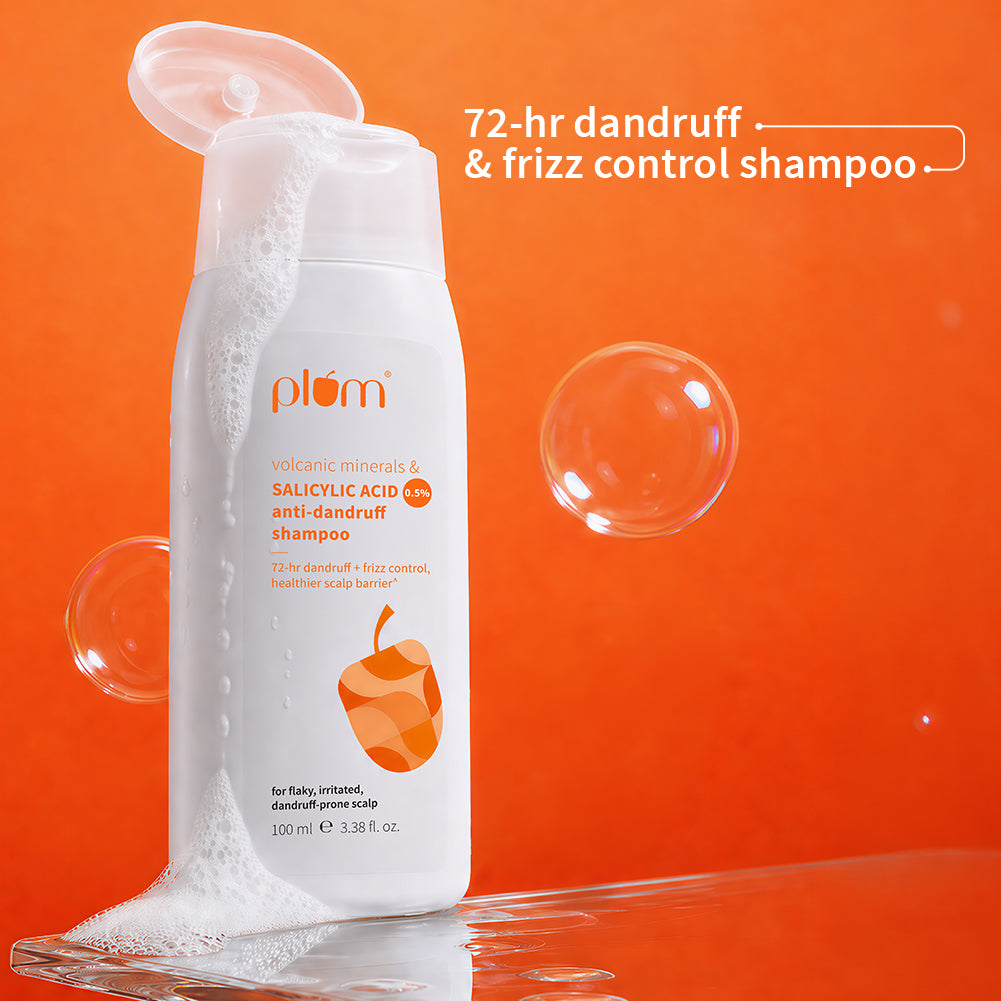
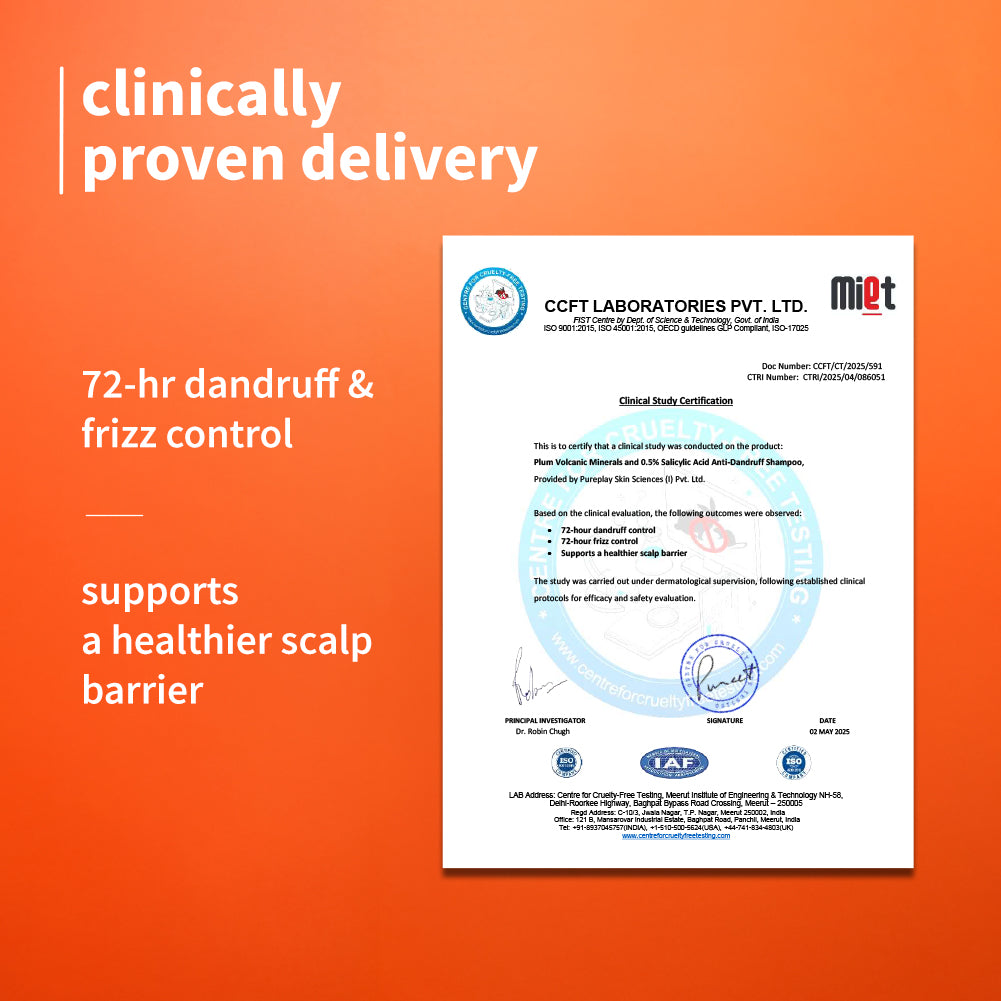
Salicylic acid is a proven exfoliating active that breaks down flakes and clears buildup on the scalp, rather than just washing surface flakes away temporarily. It works especially well on oily, flake-heavy scalps where buildup keeps returning. Our Volcanic Minerals & 0.5% Salicylic Acid Shampoo uses this at an effective 0.5% concentration, giving 72-hour dandruff and frizz control while supporting a healthy scalp barrier.
Best Anti-Dandruff Shampoo for Oily and Flake-Prone Scalps
For a scalp that flakes often or feels oily by the second day, a clarifying, salicylic-acid-based shampoo works better than a purely moisturising one. The Volcanic Minerals & 0.5% Salicylic Acid Shampoo is formulated for exactly this — dandruff-prone hair that needs both flake control and scalp barrier support, suited to daily or alternate-day use.
Dandruff and Hair Fall — Is There a Link?
An itchy, inflamed, flaky scalp can lead to more breakage and shedding than usual, since scratching and flaking disturb the hair follicles. Dandruff itself doesn't directly cause permanent hair loss, but leaving it untreated can leave hair feeling weaker during washing and styling. Clearing the underlying flaking with a salicylic acid anti-dandruff shampoo helps reduce that knock-on breakage.
How to Use an Anti-Dandruff Shampoo the Right Way
Consistency matters more than any single wash. Massage the shampoo into the scalp — not just the lengths — and let it sit for a couple of minutes before rinsing, so the salicylic acid has time to work. Use it 2–3 times a week rather than daily to start, and give it 3–4 weeks of consistent use; dandruff rarely clears in a single wash.
Frequently Asked Questions
What causes dandruff?
Most often an oily scalp with excess sebum, a dry and dehydrated scalp, sensitivity to hair products, or a natural yeast-like organism on the scalp multiplying more than usual.
What's the difference between dandruff and a dry scalp?
Dry-scalp flakes tend to be smaller and drier with itchiness. Dandruff flakes are usually larger, oilier, and can look yellowish. Dry scalp needs more moisture; dandruff usually needs a clarifying, medicated shampoo.
Which shampoo is best for dandruff?
For an oily, flake-heavy scalp, a salicylic-acid shampoo helps clear buildup at the source rather than just washing away surface flakes temporarily.
Can anti-dandruff shampoo also help with hair fall?
It doesn't directly stop hair fall, but calming scalp irritation and flaking reduces the breakage that comes from scratching an inflamed scalp.
How often should I use an anti-dandruff shampoo?
Most people see the best results using it 2-3 times a week to start, so the scalp doesn't dry out from overuse, then adjusting based on how the scalp responds.
Why is salicylic acid used in anti-dandruff shampoo?
It exfoliates the scalp and breaks down flakes and buildup, rather than just cleansing the surface, making it especially effective for oily, flake-prone scalps.
Is there a different dandruff shampoo for men and women?
Dandruff shampoos work on scalp type and severity, not gender, so the same formula suits both.
How do I treat dandruff on an oily scalp?
Use a salicylic-acid or clarifying shampoo focused on the scalp itself rather than the lengths, and avoid over-washing, which can trigger more oil production and flaking.
Can dandruff be cured permanently?
It can be managed very effectively with consistent use of the right shampoo, though it can recur with weather, stress, or product changes. Most people keep it under control long-term rather than fixing it once.
Do home remedies work for dandruff, or is a medicated shampoo better?
Home remedies can offer mild, temporary relief, but a shampoo with an active like salicylic acid is generally more effective and consistent for ongoing control.


